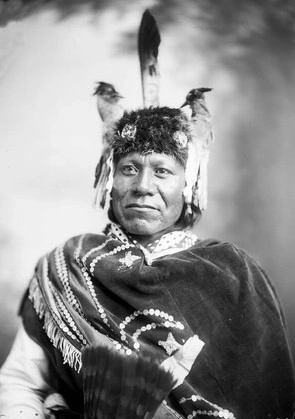
Crow Scouts

Biographical Sketches of the Six Crow Scouts and Mitch Bouyer

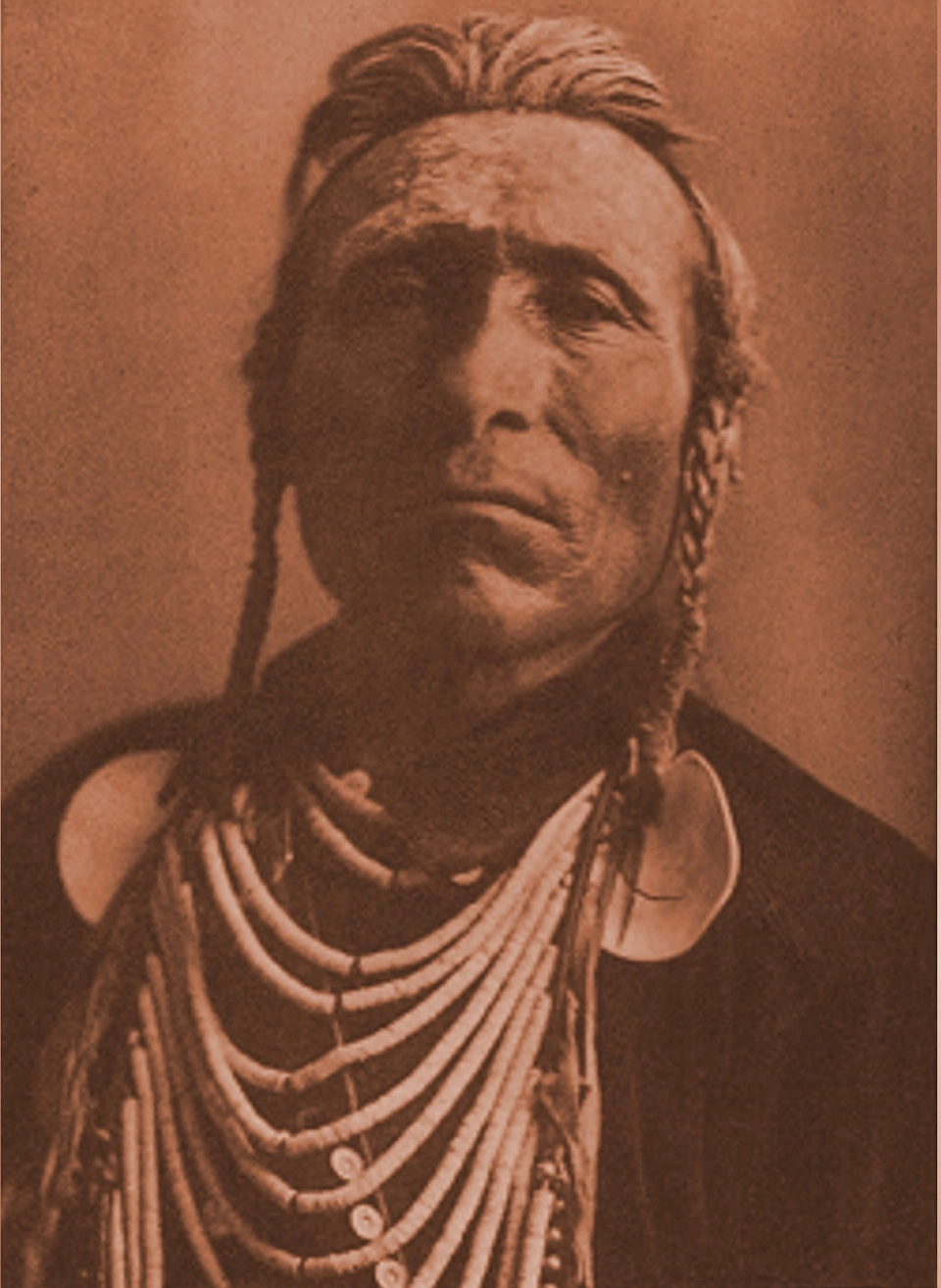
Curley

Shísshiash – Curley: ca. 1859 – May 22, 1923. Whistling Water Clan. Often cited as the youngest of the six men who enlisted in April 1876, he was 17 or 18, making him about the same age as White Man Runs Him. Staying with the other Crows and Mitch Bouyer, he departed the Custer column when directed to return to the Terry column. Stories of his “escape” from the battlefield by soldiers who were there, incorrect and often embellished to increase the stature of the teller, started within days of the battle. These stories were subsequently repeated often enough to become widely accepted as fact. It is these stories, embellished to increase the stature of the teller, that have come to cloud Curley’s and the Crows participation.

Curley was not in the fight and said so repeatedly from the beginning, in line with the cultural expectations of a Crow warrior. Custer’s release of the mission for the Crow and Arikara scouts was not well-known, and “run-away” soon became ingrained in the battle literature about Curley and influenced even those who recorded Crow narratives two or three decades later to use the same characterization of his departure. It clouds his story and relationships to this day. After the battle, he served in several capacities for the Crows. His mother, Strikes By the Side of the Water, and White Swan lived in a lodge on his allotment.
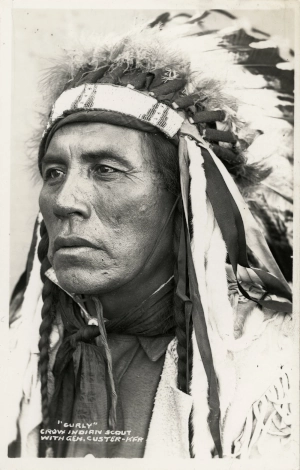
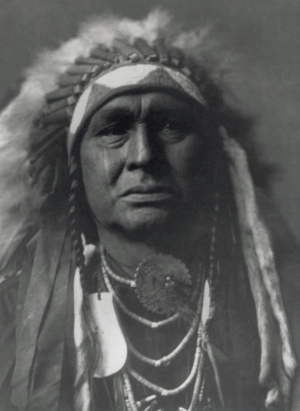
Curley (Crow scout) portrait

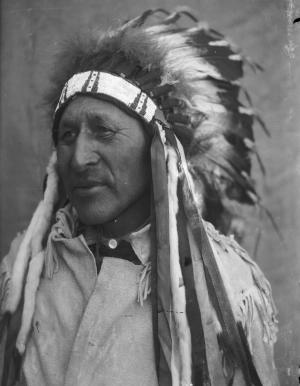
White Man Runs Him

Baaishtashíilikalussh - White Man Runs Him: ca. 1858 – June 2, 1929. Big Lodge Clan. Most histories of the battle say he was about 23-24 years old at the time of the Little Big Horn battle. His birth year was around 1858, making him about 18 or 19 years old. He and others discovered the Lakota and Cheyenne encampment from the Crow’s Nest. According to most of White Man Runs Him's accounts of the battle, Custer headed down Medicine Trail Creek to engage the Sioux and Cheyenne.

White Man Runs Him recounts that he and the other Crow scouts intended to follow Custer down into battle, but that their chief scout, Mitch Bouyer, ordered them to rejoin the pack train instead. White Man Runs Him retired to a ridge along with Goes Ahead and Hairy Moccasin to join Major Reno. They stayed there briefly, then they departed to find the Terry column. They found them, reported the destruction of Custer’s command and the deaths of the other Crows, then left to go home. His status as a Little Big Horn survivor made him a minor celebrity late in life, and he even made a cameo appearance in the 1927 Hollywood movie “The Red Raiders.”

White Man Runs Him (Crow scout) portrait

Goes Ahead

Basséekosh - Goes Ahead: ca. 1851 – May 31, 1919. Newly Made Lodge Clan. He, along with Hairy Moccasin, White Man Runs Him, and Curley, was on the Crow’s Nest the morning of June 25 when they pointed out the Lakota-Cheyenne village in the Little Bighorn river valley to General Custer. They stayed with the main column including Mitch Bouyer and accompanied the column into Medicine Tail Coulee. Mitch Bouyer told them Custer had released them from their mission and to leave. While there, according to his testimony, they saw Custer shot in the river. Curley had left by this time as directed. These three then went back to where Reno had retreated and later departed for home. They ran into the other column under Terry, where they passed on the information that Custer had been killed, as well as Curley, Half Yellow Face, White Swan, and Mitch Bouyer.

The first three of those four men in fact had not been killed and it was an assumption made by the other scouts who had not seen them after the battle. From there, they returned to the Crow encampment at the junction of Pryor Creek with the Yellowstone River, where they told of those deaths. After the battle, Goes Ahead settled on the Crow reservation, married, and raised a family. Goes Ahead died in 1919 and was buried in the military cemetery at the Little Bighorn Battlefield. His widow, Pretty Shield, became a sought-after source of information concerning the battle late in her life. Her autobiography, Pretty Shield, Medicine Woman of the Crows, contained information on Goes Ahead and the battle.

Goes Ahead (Crow scout) portrait

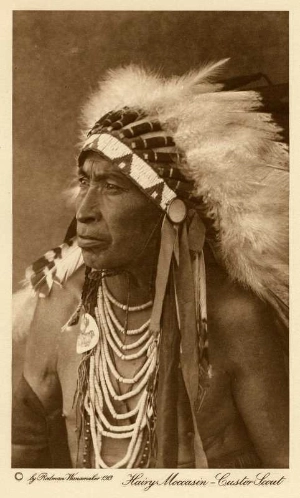
Hairy Moccasin

Isahptisssíish - Hairy Moccasin: ca. 1854 – October 9, 1922. Bad War Deeds Clan. He, along with Goes Ahead, White Man Runs Him, and Curley, initially stayed with the Custer column until Custer released them. His interviews mirror those of Goes Ahead and White Man Runs Him as to what happened after they left the column. After the battle, he married Quick, and the pair had two sons – Fire Head and Kills the Mud Thrower. Both Fire Head and Kills the Mud Thrower crossed over to the other side camp in 1893.

Quick then gave birth to Bird Eggs and Mary Hairy Moccasin before her own death on August 16, 1901, at the age of 40. The tragedies seemed to pile on as Hairy Moccasin lost his new daughter on March 7, 1902, followed by the death of Bird Eggs on October 1, 1903. Within 12 months of this 1902 family register entry, Hairy Moccasin was all alone. He never remarried, lived out his life as a farmer, and was awarded a military pension eleven months before he crossed over to the other side camp.

Hairy Moccasin (Crow scout) portrait

Half Yellow Face

Ischúushiilish - Half Yellow Face (the pipe carrier): ca. 1830 – 1879/1882-84? Bad War Deeds Clan. He was an uncle to Pretty Shield, Goes Ahead’s wife. He carried the pipe for the six scouts assigned to the Seventh U.S. Cavalry. He was also known as “Big Belly” by the Arikaras and, according to White Swan, also as “Blue Moccasin.” He and White Swan were ordered to go with Reno’s force across the river. They were in the wood line to the right of the soldiers when attacked by several Cheyennes and Lakotas. White Swan was badly injured, and Half Yellow Face, helped by an Arikara, Young Hawk, saved him from death. After the battle, he stayed with White Swan until they reached the Crow encampment on the Yellowstone River about mid-July 1876.

Half Yellow Face continued to scout for the Army off and on and was reputed to be killed along the Musselshell about 1879. However, two photos taken by D. F. Barry in 1881 at Fort Custer show Half Yellow Face, one with his Army scout coat with stripes and the other with fellow Crow Snake, making the 1879 date suspect. He was not counted in the 1885 census of the Crow Tribe, making his death sometime between 1882 and 1884. His wife, Can’t Get Up, was photographed around 1907 by Fred Miller.

Half Yellow Face (Crow scout) portrait

White Swan

Bíilaachiash - White Swan: ca. 1850 – August 12, 1904. Whistling Water Clan. He was also known as “White Goose” and “Fighting Lion.” The next oldest to Half Yellow Face, he was the only one of the six to be wounded in the Little Big Horn battle of 1876. His wounds were severe – shot twice in the right leg, a glancing lance blow to the forehead, and a gunshot to his right wrist and hand. After recovering, he went on to scout for the U.S. Army off and on until 1881. After that, he became a well-known artist and one American artist called him the “Rembrandt of the Crows.”

His mother and Curley’s mother were sisters. His wife’s identity has been lost, and she died around 1873; they had no children. He and a sister, Sage Woman, who lived around Pryor, shared the same father. The effects of his combat wounds became more disabling as he grew older, and the Army granted him a pension in 1898, one of the first Indigenous scouts to be so honored. At his request, he was interred in the Custer Battlefield National Cemetery with military honors.

White Swan (Crow scout) portrait

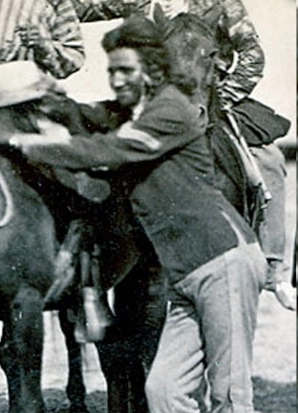
Mitch Bouyer

Mitch Bouyer: ca. 1839 – June 25, 1876. Bouyer was born to a French father and a Santee Sioux mother. He married a Crow lady, Magpie Outside, around 1868 or 1869. She was a close friend to Thomas LeForge’s Crow wife, Cherry. Bouyer and LeForge served together on several occasions, the last of which was the 1876 campaign. By the 1870s, his reputation as a guide and interpreter was such that one Army colonel said he was second only to Jim Bridger.

Bouyer was hired as a guide for the U.S. Army in 1876 and was detailed with the six scouts to accompany the Seventh U.S. Cavalry. He also served as a translator. At some point in the battle, he relayed Custer’s orders that the Crow scouts were done and could depart. He stayed with Custer and was killed. LeForge and Bouyer made an agreement that if one was killed, the other would take in their family. After word of his death, Bouyer’s family moved in with the LeForges. His body was not recovered after the battle, and the remains found on the battlefield in the 1980s proved to be his. He is interred in the Custer Battlefield National Cemetery.

Photo attributed to Mitch Bouyer
There is no consensus on the validity of this photograph.